
Referential and Reviewed International Scientific-Analytical Journal of Ivane Javakhishvili Tbilisi State University, Faculty of Economics and Business








Challenges and Solutions in the Development of Inclusive Education for Persons with Disabilities in Azerbaijan
Doi.org/10.52340/eab.2026.18.02.06
This paper examines the challenges and prospects for the development of inclusive education for children with disabilities in Azerbaijan. The aim of the study is to identify the main barriers to the realization of the right to education for children with limited health capabilities. The hypothesis suggests that eliminating institutional and infrastructural barriers can significantly improve accessibility and quality of education for this group. A qualitative analysis of the regulatory framework and statistical data is conducted, with an additional focus on the interpretation of state policy. The findings indicate that despite some progress, significant structural and resource limitations remain, hindering the effective implementation of inclusion. The theoretical significance of the research lies in substantiating the connection between inclusive education and sustainable development, while its practical significance is reflected in providing concrete recommendations for improving state policy and educational infrastructure.
Keywords: Inclusive education, children with disabilities, special educational needs, general education schools, physical and mental impairments
JEL Codes: I24, I28, I38, J14
Introduction
In the Republic of Azerbaijan, the right to education for persons with disabilities is safeguarded through national legislation and state guarantees. The legal framework en- sures equal access to education and explicitly prohibits discrimination based on health conditions. Individuals with limited health capabilities are provided with opportunities to receive education through specialized institutions as well as in mainstream educational settings, where necessary accommodations are made. Inclusive and integrative forms of education have been increasingly promoted within general education institutions.
Various social support mechanisms are available to persons with disabilities, includ- ing exemption from tuition fees, preferential conditions during entrance examinations, and access to inclusive education opportunities. To foster the development of inclusive education, a State Program for 2018–2024 was adopted. Within its framework, measures have been undertaken to improve the legal and regulatory base, enhance the physical ac- cessibility of educational institutions, train pedagogical staff, and raise public awareness. In 2024, specific national educational standards for learners with limited health capacities were approved to further strengthen the system.
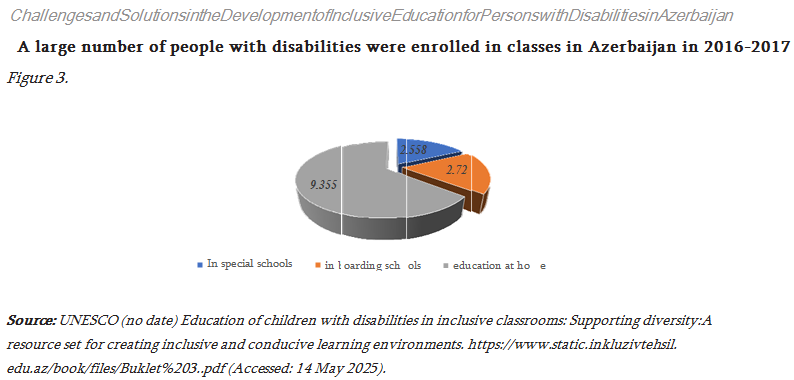
Despite these developments, statistical data indicate that a significant number of children with disabilities remain excluded from formal education. For example, during the 2016–2017 academic year, only one-third of approximately 43,000 school-age children with disabilities received education in specialized schools, boarding institutions, or through home-based instruction. This reflects persistent challenges in ensuring educational ac- cess for this population.
The reasons behind educational exclusion are multifaceted and include social, phys- ical, and pedagogical barriers. These encompass the inaccessibility of the physical envi- ronment, insufficient preparedness of teachers for inclusive education, prevailing nega- tive stereotypes in society, lack of parental awareness, and socioeconomic constraints.
Although the number of specialized institutions and inclusive classrooms has in- creased in recent years, the implementation of inclusive education on a broader scale remains a challenge. Between the 2014/2015 and 2022/2023 academic years, the number of students enrolled in inclusive classes within general education institutions rose from 631 to 1,478.
A comparative look at international experience reveals that approximately 65% of children with disabilities in Europe attend mainstream schools. In the United States, legal acts in force since 1975 provide a foundation for inclusive education for children with dis- abilities. However, practical difficulties in both regions still persist.
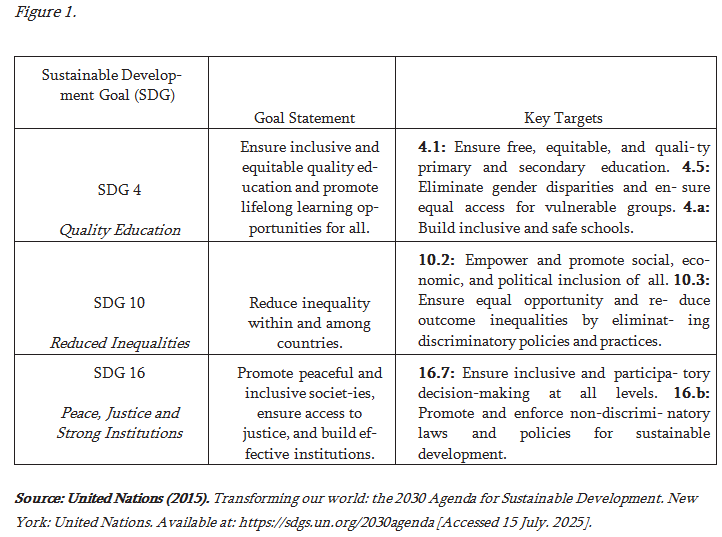
To advance inclusive education in Azerbaijan, it is essential to enhance teacher train- ing, ensure the accessibility of physical and digital environments, improve public and pa- rental awareness, and strengthen the effective implementation of legislation. Reforms and development programs in these areas are already underway and are expected to continue. Overall, the expansion of inclusive and equitable educational opportunities for per- sons with disabilities not only facilitates their social integration and personal develop- ment, but also contributes significantly to the achievement of the Sustainable Develop-
ment Goals (SDGs)- particularly SDG 4, SDG 10, and SDG 16 (Figure 1).
The Essence of Inclusive Education and Perspectives on It
UNICEF considers “inclusive education” as the most effective approach to ensuring that all children have a fair chance to attend school, acquire necessary skills, and develop their potential. According to the organization, inclusive education means that “all children, including those with disabilities and other marginalized groups, learn together in the same classrooms and school”. Marginalized groups here refer to children excluded from edu- cation due to language barriers, gender minorities, ethnic background, or other reasons.
Economic literature emphasizes that “inclusive education is not merely about placing children with special needs in mainstream classrooms but about making learning acces- sible and meaningful for all students” (Florian, 2008). Inclusive education thus aims to create real and equitable learning opportunities for these groups as well. Recent educa- tional materials define inclusive education (from French inclusive-“including and Latin include-“to include”) as a “developmental process ensuring education accessibility for all children and adapting to their diverse needs”.
Researchers describe the ideology underpinning inclusive education as the “elim- ination of all forms of discrimination, ensuring equal treatment for all individuals, and creating appropriate educational conditions for children with special needs” (Andrianova, 2016) and (Alekhine, 2015).
In Azerbaijan, the State Program for the Development of Inclusive Education for Per- sons with Disabilities defines inclusive education as the “involvement of children in edu- cation in the same classrooms as their peers regardless of their physical, mental, intellec- tual, or other characteristics”. Ainscow, Dyson and Booth (2006), in their book “Improving Schools and Developing Inclusion”, explain inclusion “not simply as placing children with special needs into general education schools, but as restructuring school culture, policies, and practices to respond to student diversity”. They present inclusive education as an ef- fective way to reduce discrimination in the education system and meet the needs of every child.
From these definitions, it is clear that inclusive education is not merely a pedagogical approach but a social justice model based on human rights. This model aims to create equal opportunities not only for children with disabilities but for all members of society. The goal is not to adapt children to the education system but to adapt the education sys- tem to the diversity of children.
The concept of inclusive education is often narrowly associated with children with disabilities in society. However, inclusivity is a broader concept that encompasses eth- nic background, language, socio-economic status, gender, religion, migration status, and other differences. It ensures the right to education for every individual and equal oppor- tunities for all. In Azerbaijan, however, inclusive education is predominantly emphasized in the context of children with disabilities, leading to a limited understanding of inclusion mainly as related to this group. Consequently, the educational needs of other vulnerable and marginalized groups are often overlooked.
A comprehensive model of inclusive education that embraces all forms of diversity is essential for sustainable social development and integration, contributing to the over- all well-being of society. Therefore, the concept of inclusivity must be understood more broadly and accepted as a crucial contemporary requirement.
The academic community holds diverse views on the inclusion of children with disa-
bilities in inclusive education, with extensive debates surrounding the topic. Both positive and critical perspectives exist. Challenges cited in inclusive education include “insuffi- cient teacher training, lack of resources, increased workload, social integration difficulties, and assessment challenges” (Margevica and Sumane, 2021). Additionally, factors such as “teachers’ negative attitudes toward inclusion, lack of accessible physical environments, curriculum incompatibilities, behavioral issues, including physical and emotional violence, management and organizational problems, and prioritizing formality over quality”(Akhter, Chibb and Peerzada, 2023) also negatively affect inclusive education.
However, economic literature extensively discusses not only the legal and justice
principles behind the inclusion of persons with disabilities in education but also the nu- merous additional benefits. Research shows that “students with and without disabilities in inclusive classrooms achieve better academic outcomes, and inclusive education is more cost-effective than special education. Moreover, inclusive environments foster social ac- ceptance and empathy, enhance self-confidence and social skills of students with disabili- ties, facilitating their active integration into society” (Jardinez & Natividad, 2024).
While the idea of inclusive education is important, its success requires adequate fi- nancial and material-technical support, professional teacher training, collaboration, ad- aptation of infrastructure and assessment systems to inclusivity, as well as the develop- ment of attitudes and awareness to combat discrimination. It is necessary to assess both the challenges and positive potentials of inclusive education. Only by recognizing both the problems and the long-term benefits of this model can the development of inclusive education be effectively supported.
Currently, inclusive education is widely accepted as the best educational model glob- ally, regarded as an optimal approach for social justice, individual development, and the sustainability of education systems. International organizations provide numerous rec- ommendations to countries in this regard. Rehabilitation of persons with disabilities is conducted through the education system, and their inclusion in education plays a crucial role in their societal integration. The most effective means of rehabilitation through edu- cation is inclusive education.
The World Disability Report emphasizes that inclusive education is beneficial in many
countries regardless of income level. It offers various recommendations for countries, such as “fulfilling international obligations regarding the education of children with dis- abilities, identifying their numbers and needs, emphasizing the importance of parent and community partnerships, ensuring school building accessibility, and developing curricula, teaching methods, and materials to meet diverse needs, as well as securing sufficient fund- ing”. These recommendations highlight the necessity of a systematic and multifaceted approach to effectively implement inclusive education.
According to the latest World Bank data, “children with disabilities are 2.5 times more likely never to attend school compared to their peers. At least 50% of all young persons with disabilities in low- and middle-income countries are out of school, some sources indi- cate this figure approaches 90%”. The organization highlights the significance of inclusive education by linking it to the vast scale of the problem, noting that “despite progress made over the years, by 2020 only 10 percent of countries had laws ensuring full inclusion in education, and many countries still do not collect data, report on, or utilize information regarding marginalized groups”.
The scale of this problem underscores the importance of inclusive education as the most crucial path to ensuring the equitable development of children with disabilities. Every school should foster an inclusive environment that enables children to realize their full academic, social, emotional, and physical potential, supported by a comprehensive system addressing both practical and emotional needs.
It is also important to note that beyond the adoption of laws in education systems, their effective implementation and societal readiness for inclusion are essential.
The Development History of Inclusive Education for Children with Disabilities
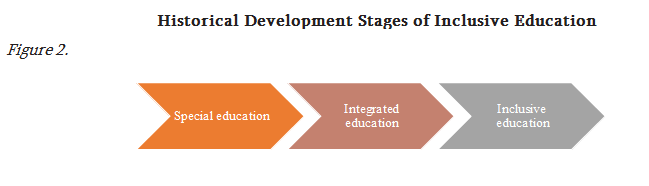
A review of the historical involvement of children with disabilities in education re- veals that in the early 20th century, these children were provided with separate living arrangements, and institutions such as orphanages and boarding schools were estab- lished for their education. Although these institutions offered the necessary conditions for education, the issue of their integration into society was largely overlooked. It should be noted that the history, developmental stages, and essence of inclusive education have been extensively examined in the scholarly works of various researchers (Kirillova, 2009) and (Iarskaia-Smirnova and Romanov, 2007). Overall, an overview of the history of inclu- sive education shows that its formation and development have passed through multiple stages (Figure 2).
Beginning in the 1960s, there was a growing emphasis on integrated education, with children with disabilities being admitted into mainstream schools. While physical integra- tion was often achieved under this approach, adequate conditions to meet their educa- tional needs were not always provided.
From the 1980s onward, the concept of inclusive education evolved, shifting from merely placing children in the same classroom to creating an educational environment that fully supports their individual needs. This approach is considered beneficial for both social and academic progress.
In recent years, the principle that inclusive education should form the foundation of the entire education system has gained support. The realization of this principle requires “the collaboration of school communities, teachers, and parents to fully develop each stu- dent’s potential” (Villa and Thousand, 2005). This approach stems from the understanding that inclusive education is not solely about physical co-education but about supporting the holistic development of each learner. Therefore, cooperation among all stakeholders involved in the educational process is of critical importance.
The International Legal Framework for Inclusive Education
The concept of inclusive education is reflected in a number of key international legal and normative documents. These documents not only protect the right to education for persons with disabilities but also impose legal obligations on states to establish inclusive, equitable, and accessible education systems.
One of the most important instruments in this regard is the United Nations Conven- tion on the Rights of the Child. Article 23 of the Convention explicitly recognizes the right of children with disabilities to education and encourages the provision of educational op- portunities that support their full social integration and personal development. This pro- vision was later interpreted by the Committee on the Rights of the Child as being grounded in the principle of inclusive education.
Another key milestone in the global promotion of inclusive education is the World Declaration on Education for All. Adopted in 1990 with the support of UNESCO, UNICEF, and the United Nations Development Program, this document laid the political foundation for inclusive education. By endorsing the Declaration, states committed themselves to uni- versal primary education and equitable access to education for children with disabilities. The Salamanca Statement and Framework for Action, adopted in 1994, represented another pivotal step in advancing inclusive education. It called on governments and the international community to prioritize the inclusion of children with disabilities in main- stream educational systems rather than relying on separate special education models
(UNESCO, 1994).
The most comprehensive and legally binding international instrument to define the educational rights of persons with disabilities is the United Nations Convention on the Rights of Persons with Disabilities (CRPD), adopted in 2006. The Convention places a clear obligation on states to implement inclusive education at all levels of the education sys- tem. According to the Convention, “persons with disabilities must have access to free and compulsory primary and secondary education on an equal basis with others, without dis- crimination, and with reasonable accommodation of their needs”. The Convention also highlights several key areas: physical and informational accessibility of schools, provision of appropriate teaching conditions and individual support, the use of alternative modes of instruction such as Braille and sign language, and access to all levels of education, in- cluding higher and vocational education.
Further guidance on implementing inclusive education was provided by the CRPD Committee through its General Comment No. 4 (2015), which offers states detailed recom- mendations for building the legal and institutional frameworks necessary for inclusive education.
In addition, Sustainable Development Goal (SDG) 4, adopted in 2015, calls for inclu-
sive and equitable quality education for all, including persons with disabilities. Specifi- cally, targets 4.5 and 4.a aim to “eliminate disparities in education and ensure inclusive and effective learning environments for all,” emphasizing safe, non-violent, and accessible educational settings.
In summary, the international legal framework for inclusive education has been shaped by a range of conventions, declarations, and strategic instruments that collectively establish a strong foundation for the protection and realization of the right to education for persons with disabilities.
The Right to Education of Persons with Disabilities in Azerbaijan
The legislation of the Republic of Azerbaijan guarantees the right to education for all on an equal basis. According to Article 5 of the Law on Education, “the state prohibits the exclusion of any person from education based on gender, ethnicity, religion, political views, or health status and is obliged to ensure equal access to education for everyone”.
The education and vocational training of individuals with disabilities are regulated
by a number of legislative acts, including the laws “On Education”, “On General Education”, “On Vocational Education”, and “On the Education of Persons with Limited Health Capabil- ities (Special Education)”. According to the latter, “a person with limited health capabilities is defined as someone who has physical, mental, or psychological impairments that create obstacles in education unless special conditions are provided”. These individuals receive special education, which is fully funded by the state. Special education is delivered both in specialized educational institutions and in general educational settings where neces- sary accommodations are provided. Within general schools, special education is organ- ized in integrated and inclusive forms. Additionally, based on individual health conditions, these students have the right to receive education at home or within inpatient healthcare facilities.
Legal guarantees play a significant role in supporting access to education for persons
with disabilities. For example, “in admission to public preschool institutions, preference is given to children of persons disabled in connection with the Karabakh war and to children of individuals with I and II-degree disabilities”. “Furthermore, tuition fees for individuals with I and II-degree disabilities, as well as children with disabilities under the age of 18, who study on a paid basis in bachelor’s, master’s, and vocational education institutions, are covered by the state budget”. Similarly, “for vocational education, students with I, II, or III-degree disabilities, those with incomes below the subsistence minimum, or individ- uals under 20 with a parent who has a first-degree disability are also exempt from tuition payments”. These legal safeguards serve as critical tools in promoting equitable access to education and facilitating integration through inclusive support mechanisms.
Since 2005, under the framework of the “Education for All” program, increased atten- tion has been paid to inclusive education in Azerbaijan. In 2023, the Cabinet of Ministers of the Republic of Azerbaijan officially approved the “Regulations on the Organization of Inclusive Education” institutionalizing the approach.
Significant reforms have been implemented in recent years to advance inclusive education. These include the expansion of special education schools, gradual transition away from the boarding school model, and the establishment of inclusive classrooms in general education institutions. A key milestone in this regard was the Presidential Decree No. 3498, dated December 14, 2017, which approved the “State Program on the Develop- ment of Inclusive Education for Persons with Disabilities in the Republic of Azerbaijan for 2018–2024”. Under this program, “a range of activities were carried out, including: the de- velopment and management of regulatory legal acts for all levels of education; adapta- tion of curricula and school infrastructure to meet the needs of students with disabilities; preparation of pedagogical personnel for inclusive education; and cooperation with sup- port organizations for public awareness campaigns focused on the importance of inclusion and social development”.
In 2024, the Cabinet of Ministers approved the new national education standards
for special education targeting learners with disabilities. “These standards are valid for a five-year period and aim to ensure consistency and quality across the educational system”. Disability remains one of the leading causes of exclusion from formal education.
Accordingly, the proportion of children with disabilities among out-of-school children is
significantly high. “As per official statistics from 2017, approximately 72,000 children with disabilities were registered in Azerbaijan. UNICEF estimates that around 43,000 of them were of school age. However, during the 2016–2017 academic year, only 14,638 children with disabilities accessed some form of education: 2,558 enrolled in special schools, 2,725 at- tended boarding schools, and 9,355 received home-based education. This means that only about one-third of school-aged children with disabilities benefited from any type of formal or inclusive education” (Figure 3.).
While Azerbaijan has made meaningful progress in expanding access to education for children with disabilities, the overall number of those benefiting from inclusive educa- tional services remains limited, covering only a fraction of the eligible population.
Research shows that the reasons for school absenteeism among children with disabil- ities are complex and multifaceted. These children face both environmental and individual barriers in accessing education. “Environmental barriers include limited early intervention programs addressing disabling attitudes, differential treatment of children with disabilities compared to their peers, exclusionary approaches within legal and regulatory frameworks, curricula, teaching methods, and educational materials that do not adequately meet the abilities and needs of these children, as well as social, economic, and political factors. Ad- ditionally, the school and classroom environments are often not inclusive, supportive, or physically accessible for learning. Individual barriers include health conditions, lack of so- cial skills, gender, communication difficulties, and lack of or low motivation to engage in education for various reasons”.
The 2020 Global Education Monitoring Report by UNESCO extensively investigates the
systemic and multidimensional causes of school absenteeism among children with disa- bilities, highlighting “critical factors such as inadequate physical environments, insufficient teacher training, and negative societal stereotypes”. The report points out that the educa- tion system itself can exacerbate these challenges due to shortages of qualified personnel, teachers’ lack of preparedness for inclusive education, and failure to implement individu- alized approaches, all of which increase the difficulties faced by children with disabilities at school. World Bank studies also reveal that in many countries, “physical and social barriers pose significant challenges to children with disabilities attending school”.
Among the causes of absenteeism are low parental expectations, disbelief in their
children’s potential, and parents’ lack of awareness regarding their children’s right to ed- ucation. “Delays in parental acceptance of a child’s disability and associated psychological reactions are major factors negatively affecting the child’s education and social adaptation” (Hasanzade, 2024).
A significant factor is the shortage of qualified teachers and negative attitudes to- ward inclusive education among educators. Research indicates that some teachers feel unprepared to teach in inclusive classrooms and struggle to meet the needs of children
with disabilities due to insufficient theoretical knowledge and practical skills. For example,
Avramidis and Norwich “found that teachers’ attitudes toward inclusive education closely correlate with their level of professional training, and lack of preparation frequently in- creases the risk of absenteeism among students with disabilities. Negative attitudes among teachers hinder the application of individualized and supportive approaches, resulting in the isolation of children with disabilities and their tendency to drop out” (Avramidis and Norwich, 2002).
The causes of absenteeism among children with disabilities are not single or simple but involve a complex interplay of social, economic, pedagogical, and legal factors. These reasons mainly depend on the type and severity of the disability, the education system’s readiness for inclusion, physical and informational accessibility of schools, teacher pre-
paredness and attitudes, societal stigmatization, parental awareness and trust, families’ socio-economic status, and gaps in legislation enforcement. These factors interact, lead- ing to school absenteeism. The previously discussed challenges faced by inclusive educa- tion not only create barriers within the education system but also serve as primary causes of absenteeism. Therefore, strengthening inclusion should be central to future education policy and considered a vital step to ensure equitable, accessible, and quality education for all.
According to Humanium, an NGO established in Geneva in 2008 to protect children’s
welfare and rights, the inclusion of children with disabilities in mainstream education in Europe varies between countries, with approximately 65% attending general schools over- all. “Italy leads with 99.6% of children with disabilities educated in mainstream classrooms. France reports over 80%. In Switzerland, inclusion varies between cantons (administrative regions), with some extensively implementing inclusive education, though special schools remain. In the UK, financial constraints and unequal resource allocation pose ongoing challenges for inclusive education”. Despite progress in Europe, significant disparities ex- ist among countries regarding inclusive education for children with disabilities.
In the United States, inclusive education is regulated by key legislation such as the Individuals with Disabilities Education Act (IDEA) of 1975 and Section 504 of the Rehabilita-
tion Act. These laws guarantee free appropriate public education and promote maximum
participation of children with disabilities in mainstream settings. “While progress has been made, disparities and resource shortages persist. For example, during the 2021/2022 academic year, 7.3 million students with disabilities accounted for 15% of public-school enrollment. Over recent decades, the number of children served under IDEA has increased from 6.4 million in the 2010/2011 school year, representing 13% of total enrollment”. Al- though the US has a robust legal framework and support system for inclusive education, implementation and quality vary significantly across regions.
Transition to Inclusive Education in Azerbaijan
Unfortunately, there is a lack of official statistical data on the number of school-aged children with disabilities who are not enrolled in education. However, based on available information regarding special education institutions for children with disabilities and the number of students enrolled in these institutions, it is not difficult to assume that a signif- icant number of children remain excluded from the education system.
Recent statistics indicate a noticeable increase in the number of students enrolled in special classes organized for children with special educational needs (SEN) within main- stream schools. This reflects positive trends toward inclusive education in the country. Nevertheless, challenges persist in ensuring full access and participation for all children.
Of particular concern is the disproportionately high number of special schools and boarding institutions serving children with intellectual disabilities, both in terms of the number of institutions and the number of students enrolled. Compared to children with other types of disabilities, this group is more frequently placed in segregated educational settings, highlighting the limitations of inclusive practices currently in place.
Analysis of Statistical Data on Inclusive and Special Education in Azerbaijan
The analysis of statistical data reveals changes both in the structure of special edu- cation institutions and the level of integration into the general education system (Table 1).
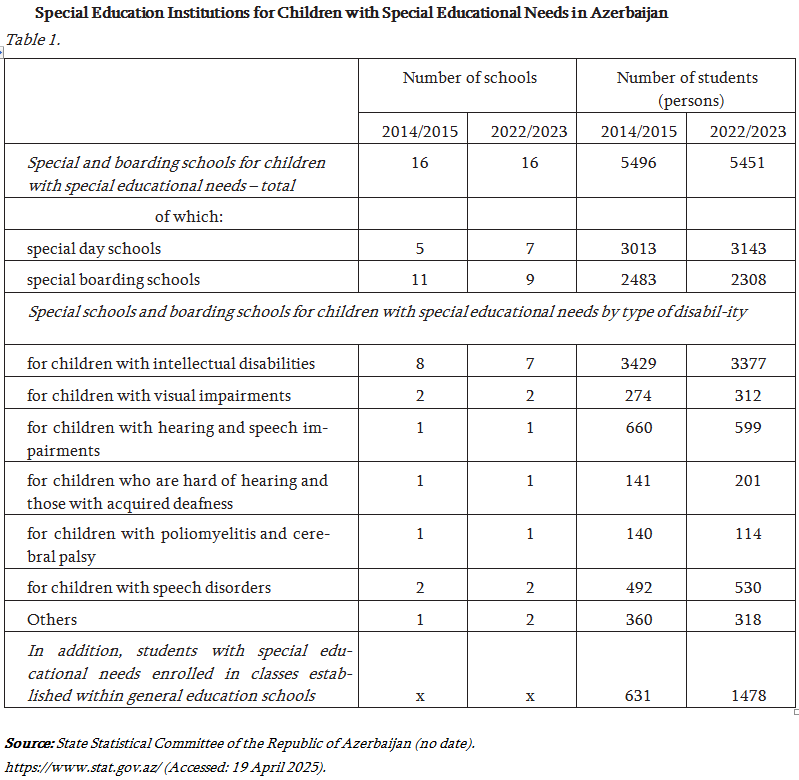
Although the total number of special schools for children with disabilities remained stable during the compared academic years, there was a slight decrease in the number of students enrolled in these schools, from 5,496 to 5,451, representing a reduction of approximately 0,8%.
The number of special schools increased from 5 to 7, with student enrollment rising from 3,013 to 3,143. Conversely, the number of special boarding schools decreased from 11 to 9, and the number of students in these institutions declined from 2,483 to 2,308. These shifts reflect reforms aimed at the development of special schools and the phased reduc- tion of boarding education.
An analysis of student dynamics by type of disability reveals decreases in some cate- gories and increases in others. Notably, there has been a significant rise in the number of children with hearing impairments and speech disorders, likely due to improved diagnos- tic practices and expanded educational opportunities.
The most significant change was observed in classes established for children with disabilities within general education schools. In the 2014/2015 academic year, 631 stu- dents attended these classes, whereas by 2022/2023, the number had increased to 1,478, marking a 134% growth and indicating the expanded implementation of inclusive educa- tion policies.
In Azerbaijan, the sole institution providing vocational education for this demograph-
ic is the Vocational-Labor Rehabilitation Center. “The Center offers vocational training and rehabilitation across more than ten fields, including computer skills, tailoring, weaving,
wood carving, female and male barbering, painting, carpet weaving, among others. Train- ees aged 15 to 29 with disabilities complete 3 to 6 month courses, receive vocational cer- tificates upon successful completion, and are supported in their transition to the labor market”. In 2024, the Center served 230 individuals with disabilities.
According to the Ministry of Science and Education, during the 2023-2024 academic year, 1,071 persons with disabilities received preferential education in state and private higher education institutions at the bachelor’s and master’s levels (including basic med- ical education and residency) as well as in secondary specialized education institutions.
Challenges in the Implementation of Inclusive Education and Their Solutions
The elimination of major challenges faced by inclusive education worldwide and in Azerbaijan plays a crucial role in ensuring sustainable development. According to the OECD report titled “The Social and Economic Rationale for Inclusive Education”, “despite the adoption of inclusive education policies at the governmental level, significant prob- lems remain in their practical implementation. The report highlights that resource short- ages, lack of a systematic approach, inadequate teacher training in inclusive pedagogy, and insufficient funding for inclusive systems collectively jeopardize the quality and sus- tainability of education”. These issues are also emphasized in research. The preparation of teachers to effectively work in classrooms with diverse students has been widely dis- cussed (Forlin, 2010). Furthermore, the report emphasizes that divergent interpretations of the concept of “inclusiveness” across countries lead to methodological inconsistencies. Some researchers rightly argue that “successful implementation of inclusive approaches requires creating an environment tailored to students with special needs within education- al institutions; otherwise, their full participation in education is unattainable, resulting in violations of the right to quality education” (Maksimova, 2018). Moreover, “inclusive educa- tion demands structural reforms aimed at expanding educational opportunities for every child” (Slee, 2011).
In Azerbaijan, inclusive education implementation faces numerous obstacles. “These include low enrollment rates, absence of a comprehensive data system, insufficient in- frastructure-particularly in regional schools where physical accessibility, adapted class- rooms, and specialized programs for children with disabilities are lacking-as well as staff shortages, methodological deficits, and prevailing social stereotypes”. These challenges indicate critical areas requiring urgent intervention.
Although steps have been taken to improve inclusive education in Azerbaijan, signif- icant work remains. Important advances have been made through the State Program on Inclusive Education and joint projects with the European Union and UNICEF, which have contributed to the creation of inclusive educational environments. Nevertheless, serious
problems persist in the field, necessitating sustained efforts.
“To effectively ensure inclusive education, educational specialists and staff must be selected based on their competencies in working with students with disabilities, and class- room environments should be adapted to suit both groups. Educational institutions need to foster continuous collaboration and communication among specialists, staff, and par- ents to support the removal of psychological and social barriers” (Musasoy, 2022). These deficiencies point to essential areas for reform.
For the successful implementation of inclusive education, ongoing professional de- velopment for teachers must be prioritized, physical accessibility in schools ensured, and public awareness regarding inclusive education increased. Consistent efforts to reduce social stereotypes are imperative. Additionally, financial support should be increased, and management systems improved to guarantee the quality and sustainability of inclusive education.
Conclusion
Significant progress has been made in the development of inclusive education in Azerbaijan. Structural changes in special education institutions and the increase in the number of classes established for children with disabilities in general education schools demonstrate the successful implementation of state policy in this field. At the same time,
the educational rights of children with disabilities have been legally guaranteed, and so- cial support mechanisms have been expanded. However, serious barriers persist in prac- tical implementation. The lack of accessible physical infrastructure, insufficient profes- sional training of teachers, and social stereotypes hinder the development of inclusive education. School dropout rates among children with disabilities remain high, indicating that further efforts are needed to ensure their full integration into society. Therefore, a comprehensive and systematic approach is required to ensure the quality and sustaina- bility of inclusive education.
Continuous enhancement of teachers’ professional training in inclusive pedagogy is essential. This will not only improve the quality of work with children with disabilities but also reduce their risk of dropping out of education. Ensuring physical accessibility in schools, providing specialized classrooms, and implementing adapted curricula are im- perative. Raising public awareness to eliminate social stereotypes is crucial. Increasing financial support and improving management systems within the framework of coopera- tion between the government and international organizations are necessary for creating an inclusive educational environment. Moreover, establishing continuous collaboration and communication mechanisms among educational institutions, specialists, and parents will make a significant contribution to the successful implementation of inclusive educa- tion.
References:
• Alekhina, S. V. (ed.) (2015) ‘The main issue of inclusive education development at the pres- ent stage’, in Inclusive education: Results, experience, and prospects. Proceedings of the 3rd International Scientific-Practical Conference, June 24–26, 2015, Moscow, pp. 20–24. Moscow: Moscow State University of Psychology and Education.
• Andrianova, E. I. (2016) ‘Inclusive education: Characteristics, essence, problems’, Vestnik Novgorodskogo Gosudarstvennogo Universiteta, (93), pp. 14–16. Available at: https://cyber- leninka.ru/article/n/inklyuzivnoe-obrazovanie-harakteristika-suschnost-problemy/viewer (Accessed: 2 August 2025).
• Iarskaia-Smirnova, E. and Romanov, P. (2007) ‘Perspectives of inclusive education in Russia’,
European Journal of Social Work, 10(1), pp. 89–105. https://doi.org/10.1080/13691450601143732
• Kirillova, E. A. (2009) ‘Historical and theoretical bases of inclusive education development in Russia’, Review of European Studies, 7(5). https://doi.org/10.5539/res.v7n5p31
• Maksimova, N. A. (2018) ‘Inclusive education in Russia: History, current state, and risks’, Peda- gogical Education in Russia, (9), pp. 123–128. Available at: https://cyberleninka.ru/article/n/ inklyuzivnoe-obrazovanie-v-rossii-istoriya-sostoyanie-i-riski (Accessed: 12 April 2025).
• Akhter, S., Chibb, M. and Peerzada, N. (2023) ‘Inclusive education: Challenges and oppor- tunities’, International Journal of Indian Psychology, 11(3), pp. 2432–2436. https://doi. org/10.25215/1103.229
• Ainscow, M., Dyson, A. and Booth, T. (2006) Improving schools, developing inclusion. Available at: https://doi.org/10.4324/9780203967157 (Accessed: 7 April 2025).
• Avramidis, E. and Norwich, B. (2002) ‘Teachers’ attitudes towards integration/inclusion: A re- view of the literature’, European Journal of Special Needs Education, 17(2), pp. 129–147. https://
doi.org/10.1080/08856250210129056
• Florian, L. (2008) ‘Inclusion: Special or inclusive education: future trends’, British Journal of Special Education, 35(4), pp. 202–208. https://doi.org/10.1111/j.1467-8578.2008.00402.x
• Forlin, C. (2010) ‘Reframing teacher education for inclusion’, in Forlin, C. (ed.) Teacher edu- cation for inclusion: Changing paradigms and innovative approaches. Abingdon: Routledge. https://doi.org/10.4324/9780203850879
• Hasanzade, N. (2024) ‘The family’s attitude towards a child with special educational needs as
a factor influencing their learning’, in From Inclusive Education to Inclusive Society (ITIS-2024). Proceedings of the 2nd International Scientific-Practical Conference, Baku, pp. 78–80.
• Jardinez, M. J. and Natividad, L. R. (2024) ‘The Advantages and Challenges of Inclusive Educa- tion: Striving for Equity in the Classroom’, Shanlax International Journal of Education, 12(2), pp. 57–65. https://doi.org/10.34293/education.v12i2.7182 (Accessed: 26 June 2025).
• Margevica, G. and Sumane, I. (2021) ‘The advantages and disadvantages of inclusive educa-
tion from the perspective of future teachers’, in Society. Integration. Education. Proceedings of the International Scientific Conference, Vol. 1, pp. 432–441. Rezekne: Rezekne Academy of Technologies. https://doi.org/10.17770/sie2021vol1.6352
• Musasoy, G. (2022) Integration of persons with disabilities into society: Challenges and ex- pected criteria. Democratic Initiatives Institute (IDI). Available at: https://www.idi-aze.org/ files/pdf/2025-01-08/QJ19lLV6ty5EJyRExmIBaCOcSkG9HKOYIOMwBJE0.pdf (Accessed: 2 June 2025).
• Slee, R. (2011) The Irregular School: Exclusion, Schooling and Inclusive Education. Abingdon: Routledge. http://dx.doi.org/10.4324/9780203831564
• Villa, R. A. and Thousand, J. S. (eds.) (2005) Creating an inclusive school. 2nd ed. Alexandria, VA: Association for Supervision and Curriculum Development.
Online Source:
• Cabinet of Ministers of the Republic of Azerbaijan (2024) https://nk.gov.az/az/senedler/qer- arlar/saglamliq-imkanlari-mehdud-olan-sexslerin-tehsili-7796 (Accessed: 24 April 2025).
• United Nations, Department of Economic and Social Affairs, Division for Social Policy and De- velopment (2006) The international forum for social development: Social justice in an open world — The role of the United Nations. https://digitallibrary.un.org/record/567990/files/ SocialJustice.pdf (Accessed: 11 April 2025).
• United Nations (2016) The Sustainable Development Goals (SDGs). https://www.undp.org/
sustainable-development-goals (Accessed: 25 June 2025).
• Republic of Azerbaijan (2009) Law on Education (No. 833-IIIQ). https://e-qanun.az/frame- work/18343 (Accessed: 17 April 2025). Republic of Azerbaijan (2001) Law on Education of Persons with Disabilities (Special Education) (5 June 2001). https://e-qanun.az/framework/4353 (Accessed: 19 May 2025).
• Republic of Azerbaijan (2012) Model Charter of Preschool Education Institutions.https://e- qanun.az/framework/24394 (Accessed: 9 July 2025).
• Republic of Azerbaijan (2019) Decree of the President of the Republic of Azerbaijan on the payment of tuition fees for persons with disability of degrees I and II, as well as for children under 18 with limited health abilities. https://edu.gov.az/az/esas-senedler/16517 (Accessed: 23 May 2025).
• Republic of Azerbaijan (2019) Decree of the President of the Republic of Azerbaijan on the payment of tuition fees for persons with disability of degrees I and II, as well as for children under 18 with limited health abilities. https://edu.gov.az/az/esas-senedler/16517 (Accessed: 23 May 2025).
• Cabinet of Ministers of the Republic of Azerbaijan (2023) Regulations on the organization of inclusive education. https://e-qanun.az/framework/53554 (Accessed: 2 March 2025).
• Republic of Azerbaijan (2017) State program on the development of inclusive education for persons with disabilities in the Republic of Azerbaijan for 2018–2024. https://e-qanun.az/ framework/37269 (Accessed: 11 March 2025).